


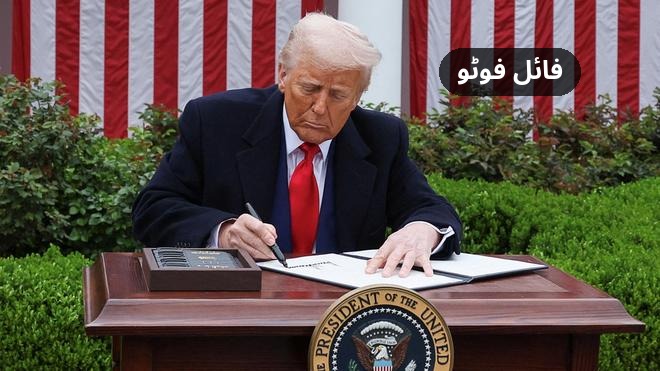

The Trump administration has announced new tariffs on 14 major trading partners, including China and the European Union, claiming that excess production has given them an unfair advantage. China faces the highest rate at 20 percent, adding to the roughly 25 percent duties that Trump imposed on China during his first term. US markets fell on the news, and gold dropped to its lowest level in more than a year.
The other partners facing the proposed tariffs are India, Japan, South Korea, Indonesia, Bangladesh, Cambodia, Malaysia, Singapore, Switzerland, Taiwan, Thailand and Vietnam. Mexico and Norway were excluded from this round because investigations into their trade practices are still ongoing.
Background
The levies follow an eight-month investigation by US Trade Representative Jamieson Greer, under Section 301 of the US Trade Act of 1974, which permits the president to impose import taxes and other sanctions against countries found to engage in unreasonable or discriminatory trade practices. The investigation was launched after the Supreme Court struck down President Donald Trump’s sweeping global tariffs in February. Washington has long accused China of subsidising its industries and flooding global markets with low-cost exports ranging from steel to electric vehicles and solar products, allegations that Beijing has once again denied. About $30bn of Chinese imports would not be subject to the proposed tariffs, as they are under consideration for tariff reductions through a bilateral mechanism known as the Board of Trade.
China rejected the move, with Foreign Ministry spokesman Guo Jiakun calling so-called overcapacity a false issue and opposing its use as an excuse for political manipulation. The European Union said it strongly rejects the premise that Europe is a source of structural overcapacity, while Switzerland rejected the allegations stemming from the investigations. Norway praised the decision. In a separate announcement, the White House also proposed a 10 percent tariff on finished aircraft made by Brazilian planemaker Embraer, and plans to raise duties on imports of Brazilian sugar that exceed quotas.
Markets reacted on Wednesday: the tech-heavy Nasdaq Composite dropped 0.6 percent after tumbling more than 4 percent in early trading, while the S&P 500 closed down 0.25 percent and the Dow Jones Industrial Average edged up 0.3 percent. The price of gold fell by more than 3 percent, also weighed down by inflation data showing a 0.3 percent rise in one of the US Federal Reserve’s key metrics for assessing inflation.


